Mandu

The city of joy

← Back
4 min read

Mandu

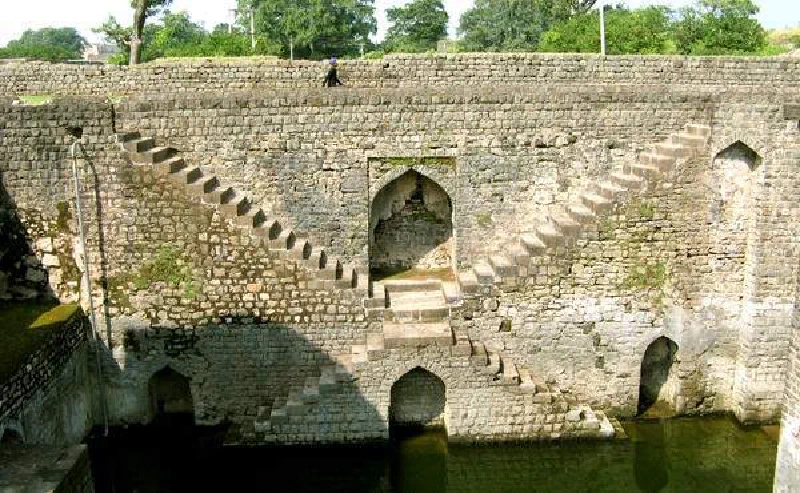
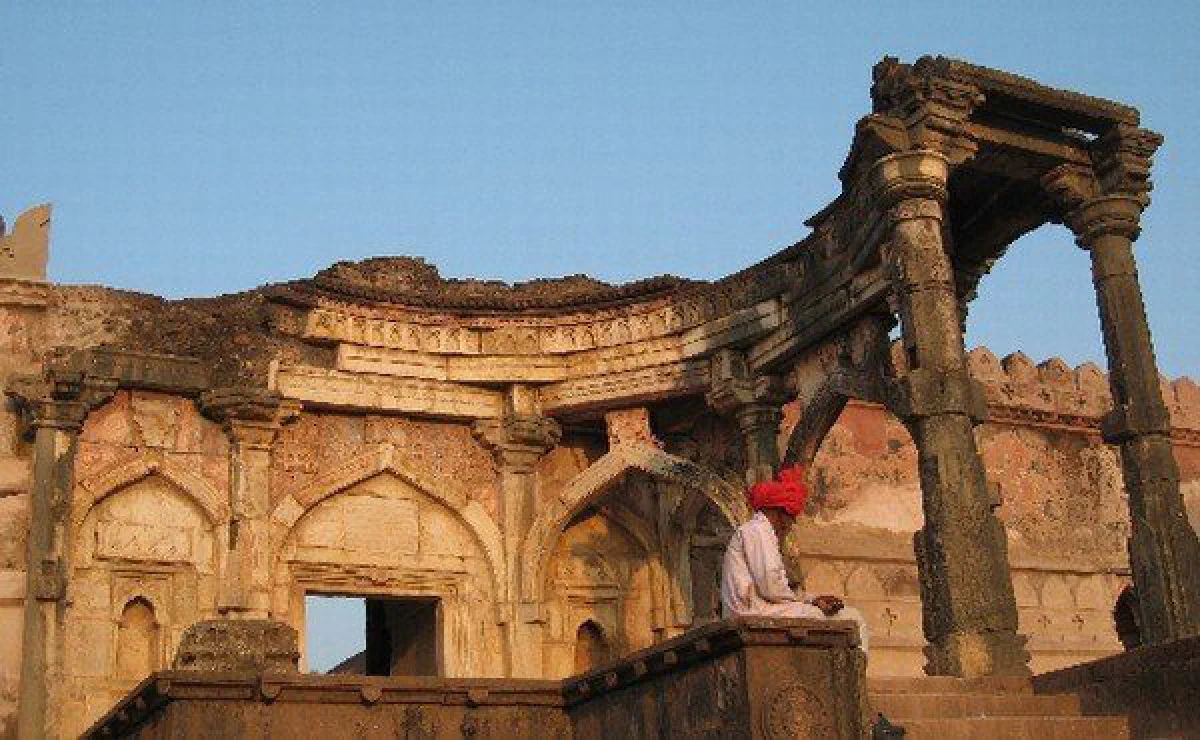
Perched along the Vindhya ranges at an altitude of 2,000 feet, Mandu, with its natural defenses, was originally the fort capital of the Parmar rulers of Malwa, which later came to be ruled by the Pathan Sultans of Malwa. These Sultans created this exquisite expanse of pleasure palace, tombs and gates. Each of Mandu's structures is an architectural gem. Some are outstanding like the massive Jami Masjid and Hoshang Shah's tomb, which provided inspiration to the master builders of the Taj Mahal centuries later.

The Darwazas

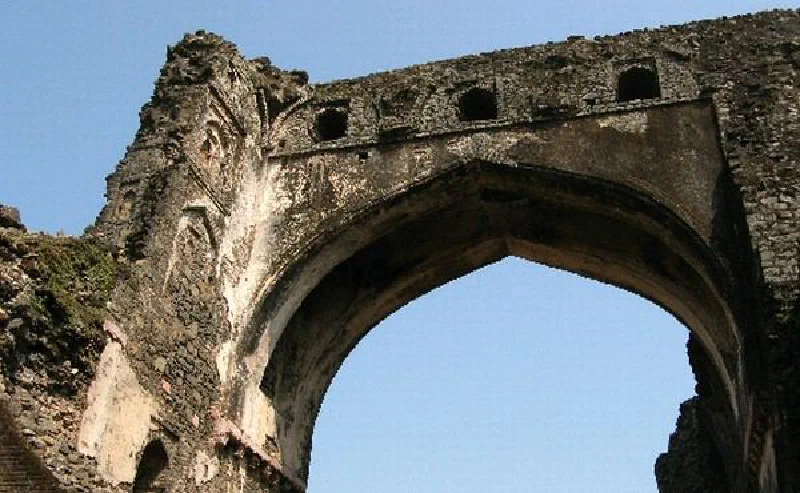
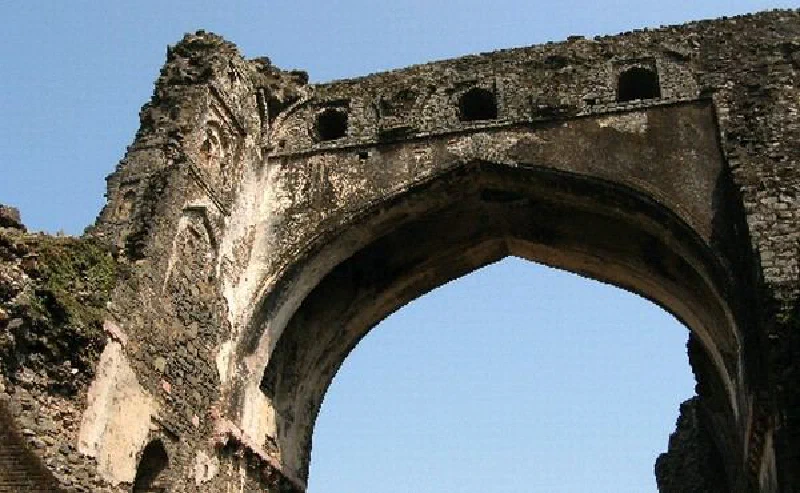
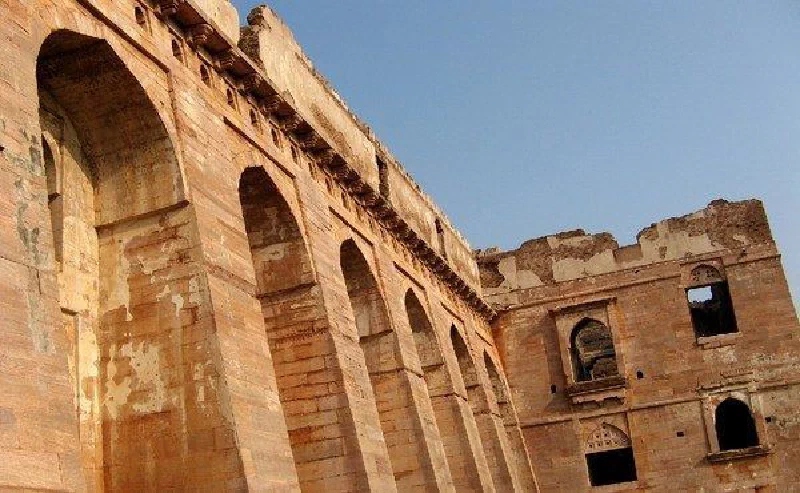
The 45 km walls that encircle Mandu are punctuated by 12 gateways. Most notable of these is Delhi Darwaza, the main entrance to the fortress city, the approach to which is through a series of well fortified gateways.

Jahaz Mahal

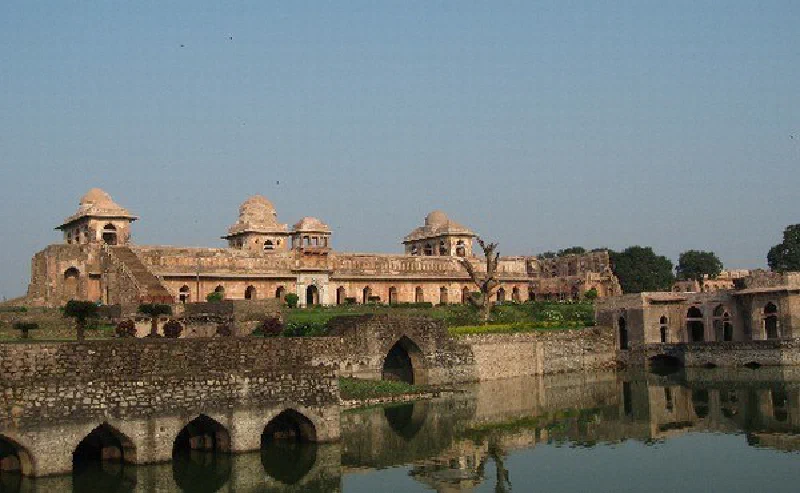
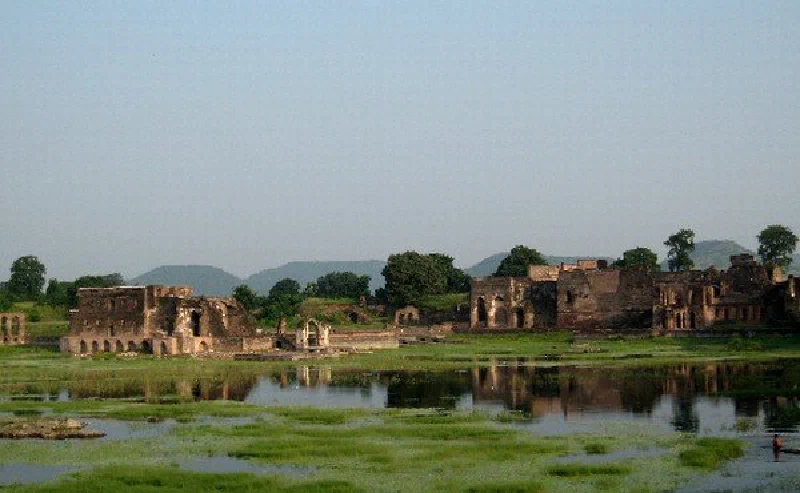
This 120 meter long "ship palace" built between the two artificial lakes, Munj Talao and Kapur Talao, is an elegant two storied palace, probably meant for the sultan's large harem. With its open pavilions and balconies overhanging the water and open terrace, Jahaz Mahal is an imaginative recreation in stone of a royal pleasure craft.

Viewed on moonlit nights from the adjoining Taveli Mahal, the silhouette of the building, with the tiny domes and turrets of the pavilion gracefully perched on the terrace, presents an unforgettable spectacle.
Hindola Mahal

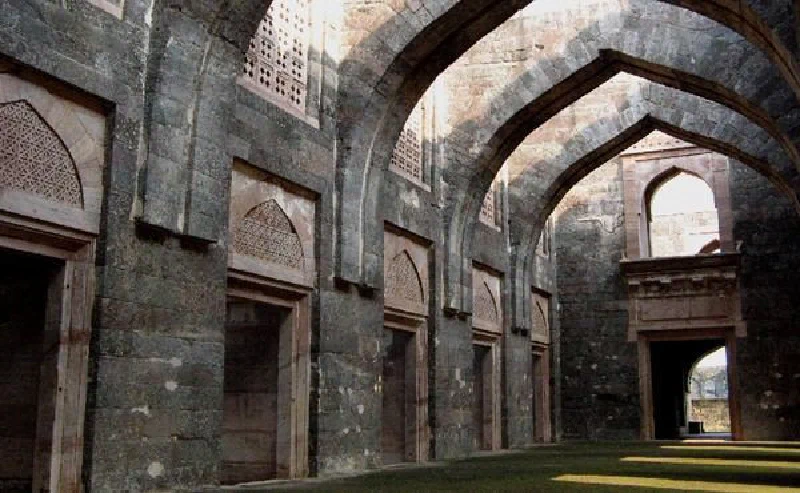
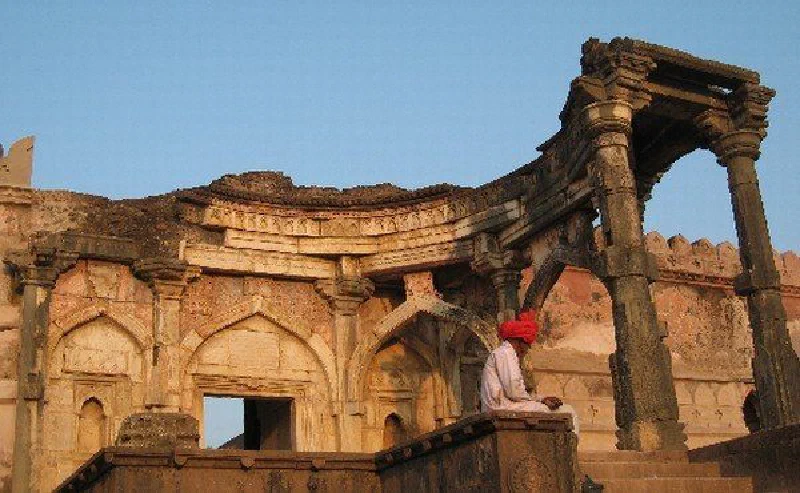
An audience hall, also belonging to Ghiyas-ud-din's reign, it derives its name of "swinging palace" from its sloping sidewalls. Superb and innovative techniques are also evident in its ornamental facade, delicate trellis work in sand-stone and beautifully moulded columns.

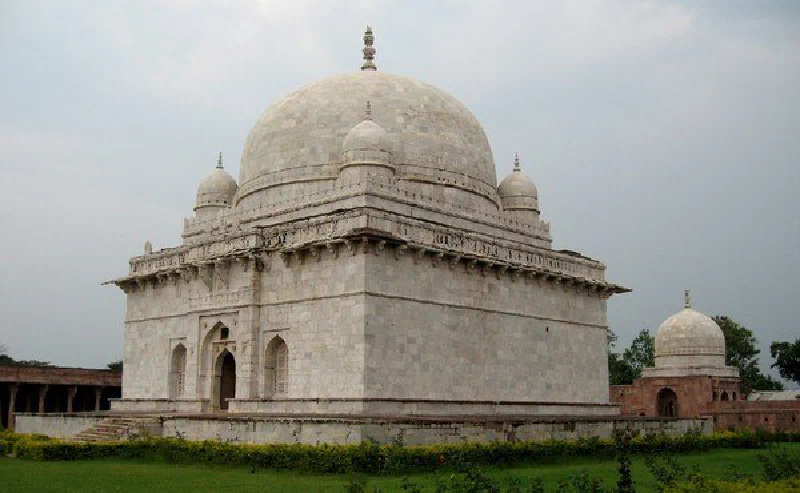
Hoshang Shah's Tomb

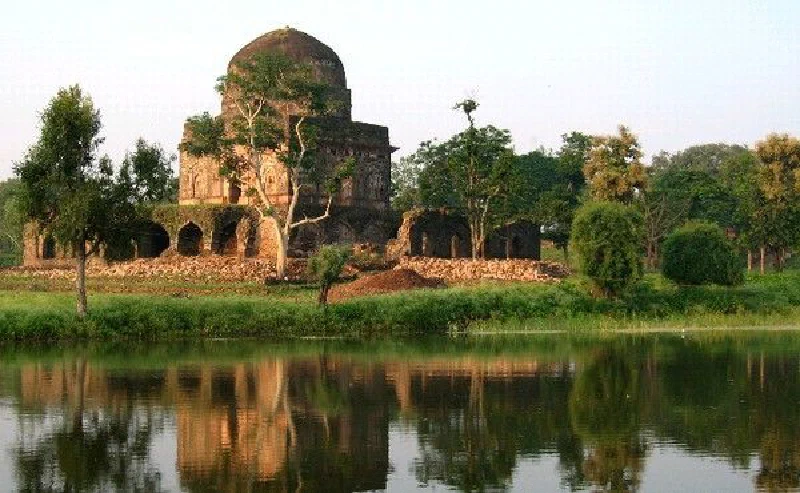
India's first marble edifice, it is one of the most refined examples of Afghan architecture. Its unique features are the magnificently proportioned dome, marble lattice work of remarkable delicacy and porticoed courts and towers to mark the four corners of the rectangle. Shah Jehan sent four of his great architects to study the design of, and draw inspiration from, the Tomb. Among them was Ustad Hamid, who was also associated with the construction of Taj Mahal.

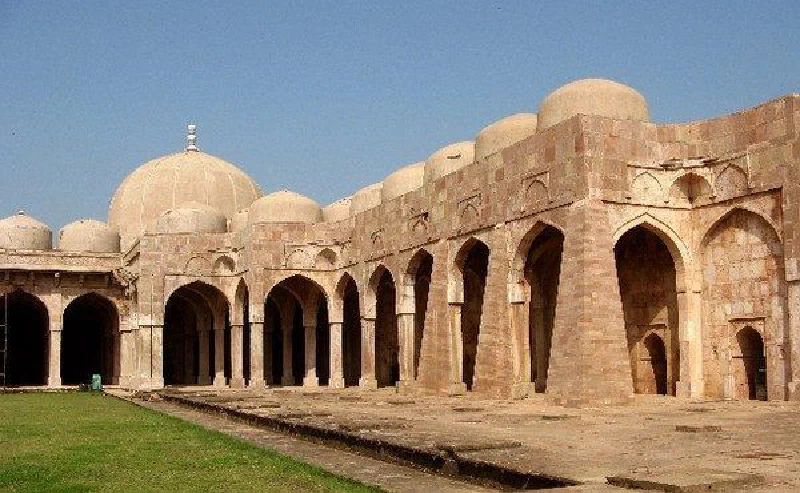
Jami Mashid

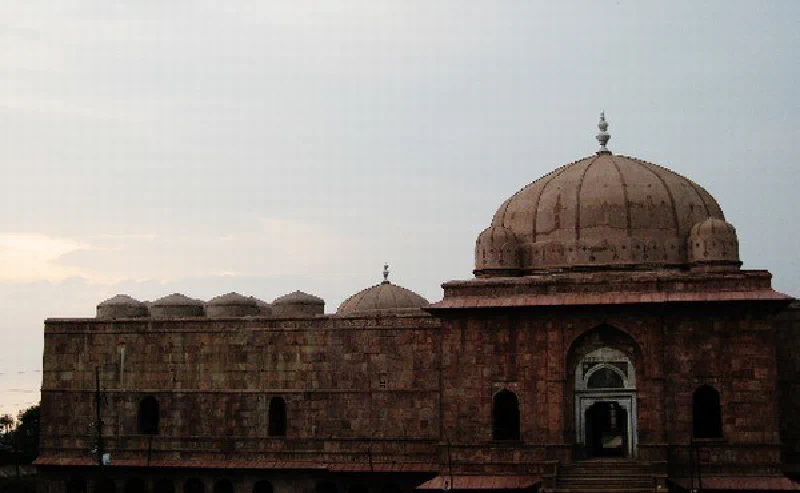
Inspired by the great mosque of Damascus, the Jami Masjid was conceived on a grand scale, with a high plinth and a huge domed porch projecting in the centre, the background dominated by similar imposing domes with the intervening space filled with innumerable domes. One is struck by the huge proportions and the stern simplicity of its construction. The great court of the mosque is enclosed on all sides by huge colonnades with a rich and pleasing variety of arches and pillars, with numerous bays topped by rows of domes above.

Baz Bahadur's Palace

Built by Baz Bahadur in the early 16th century, the palace's unique features are its spacious courtyards surrounded by halls and high terraces offering superb views of the surrounding countryside.

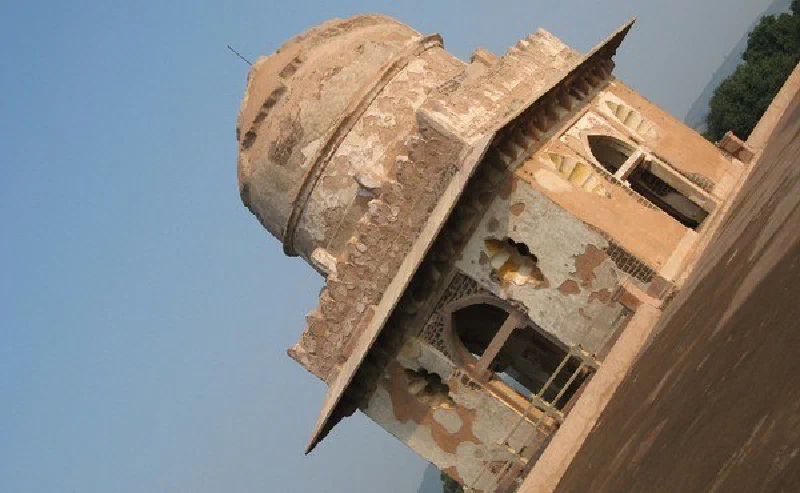
Roopmati's Pavilion

The pavilion was originally built as an army observation post. From its hilltop perch, this graceful structure with its two pavilions was a retreat of the lovely queen, from where she could see Baz Bahadur's palace and the Narmada flowing through the Nimar plains far below.
Connect by Email Follow us on Facebook Follow us on LinkedIn Twitter