Jaipur
Jaipur owes its name, its foundation and its careful planning to the great warrior astronomer Maharaja Jai Singh II. In 1728 he developed his new city, 11 km south of Amber and called it Jaipur, after himself. He laid out the city with its surrounding walls and six rectangular blocks according to the principles of town planning set out in an ancient Hindu treatise on architecture.Amber Fort
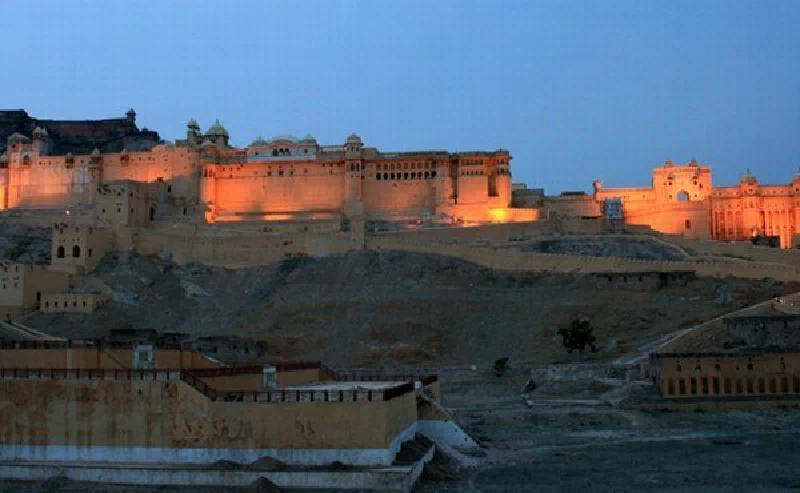
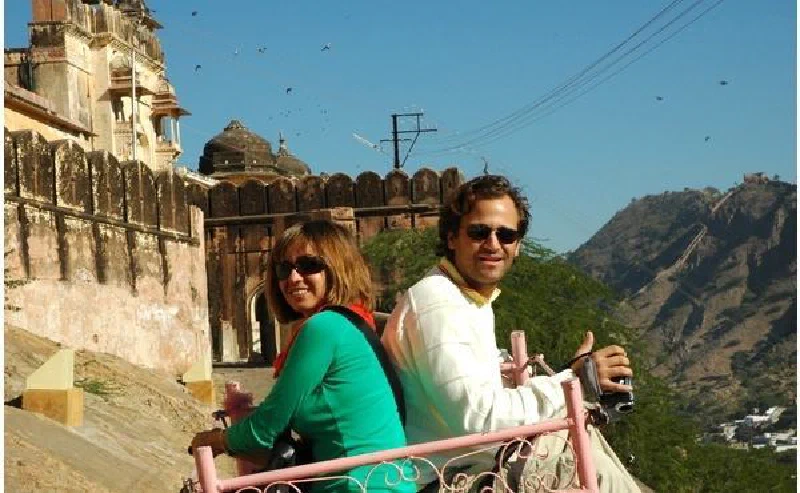
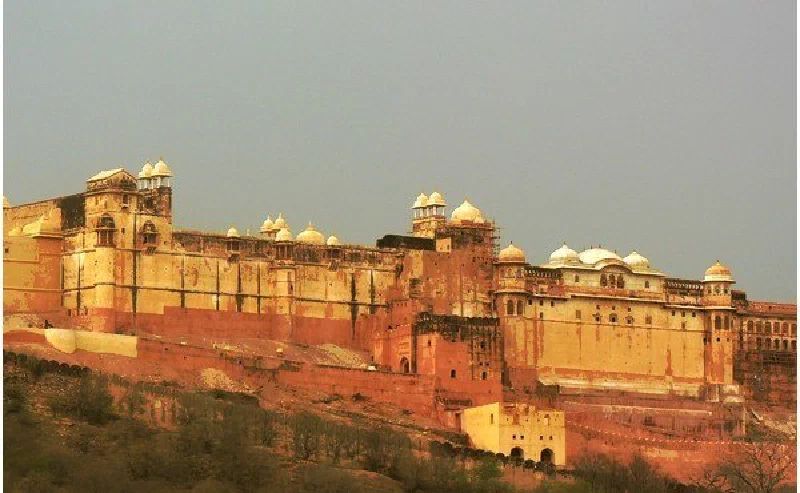
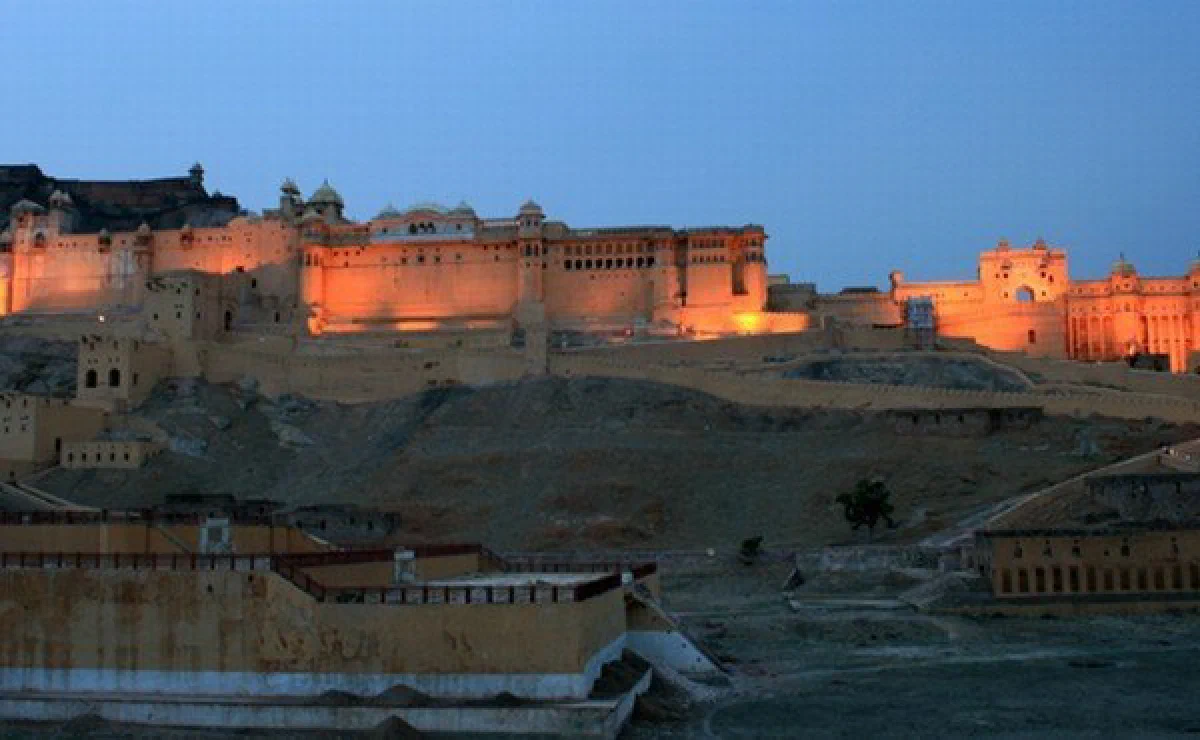
Amber Fort is superbly located, protected by the wild Aravalli hills on all sides. Amber is an enormous complex of forts and palaces. You can walk or take a jeep ride up the steep path which leads to a magnificent complex of palaces, halls, pavilions, gardens and temples built over a period of 125 years by successive rulers.City Palace
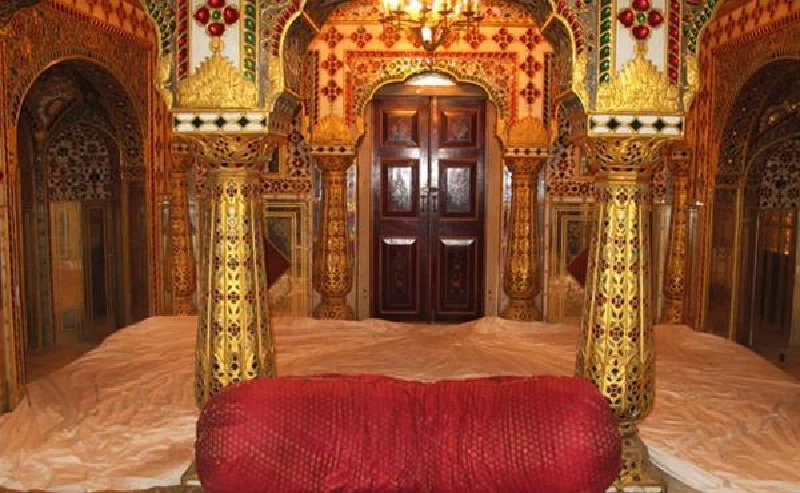
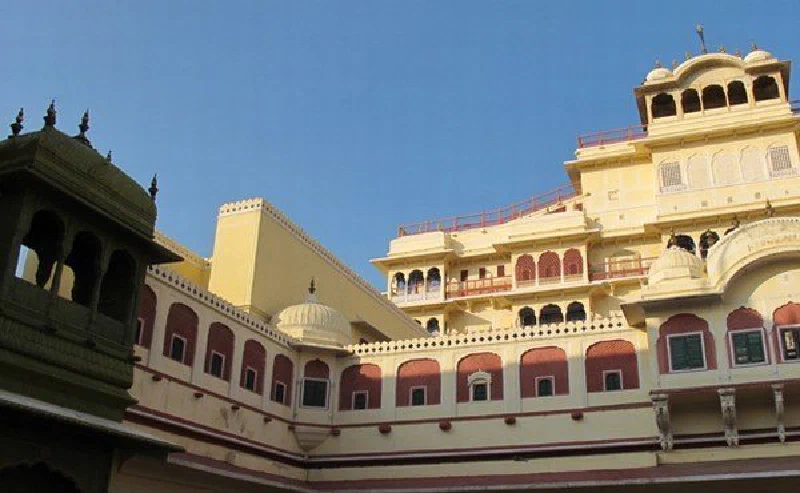
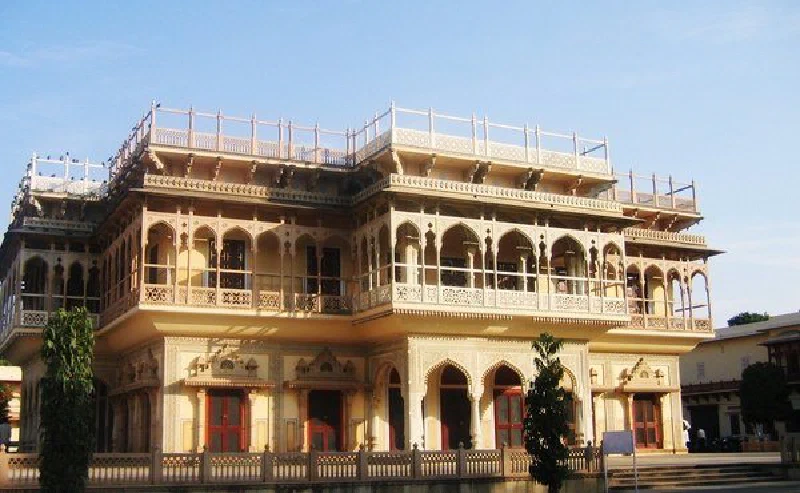
Sawai Jai Singh left Amber Fort and started residing in the City Palace in 1733 and his descendants continue to live there. The City Palace is a rambling complex divided into a series of courtyards, gardens and buildings. The museum here has textiles and Royal costumes, miniatures, carpets and manuscripts.Hawa Mahal (Palace of Winds)
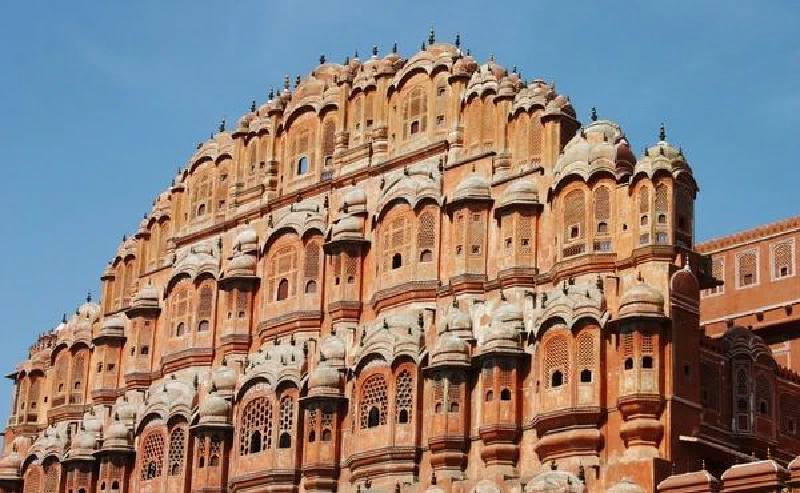
Near to the City Palace is the Hawa Mahal. This building, constructed in 1799 is best seen from the street outside. The palace is just a facade, with stone jails (lattice screens) facing the main street. Hawa Mahal was meant for the Royal ladies who could stand hidden behind the screen to watch the many processions taking place below.Jantar Mantar (the Observatory)
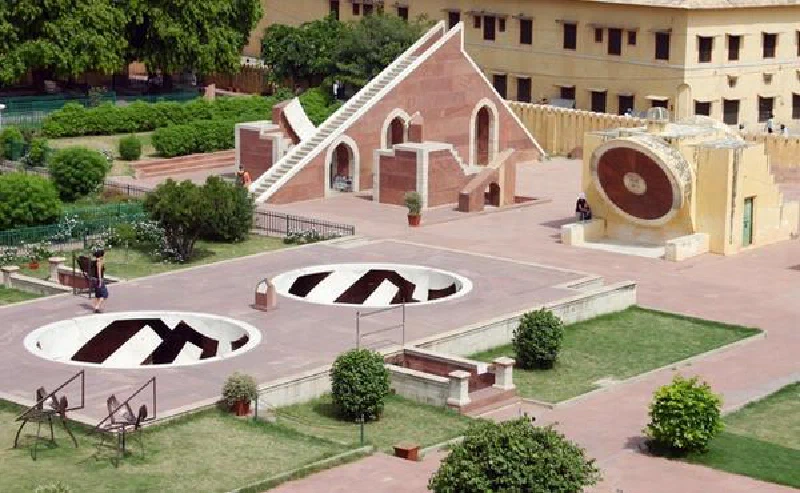
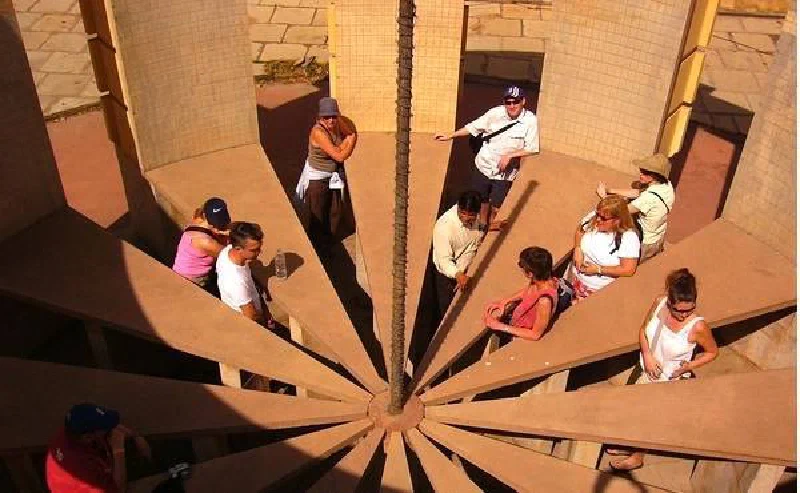
Sawai Jai Singh had a keen interest in astrology. To improve the astronomical calendar, the Jantar Mantar, a superb astronomical observation site was built in the early 18th century. It includes a set of some 20 main fixed instruments. They are monumental examples in masonry of known instruments but which in many cases have specific characteristics of their own. Designed for the observation of astronomical positions with the naked eye, they embody several architectural and instrumental innovations. This is the most significant, most comprehensive, and the best preserved of India's historic observatories. It is an expression of the astronomical skills and cosmological concepts of the court of a scholarly prince at the end of the Mughal period.Jaipur's Bazaars
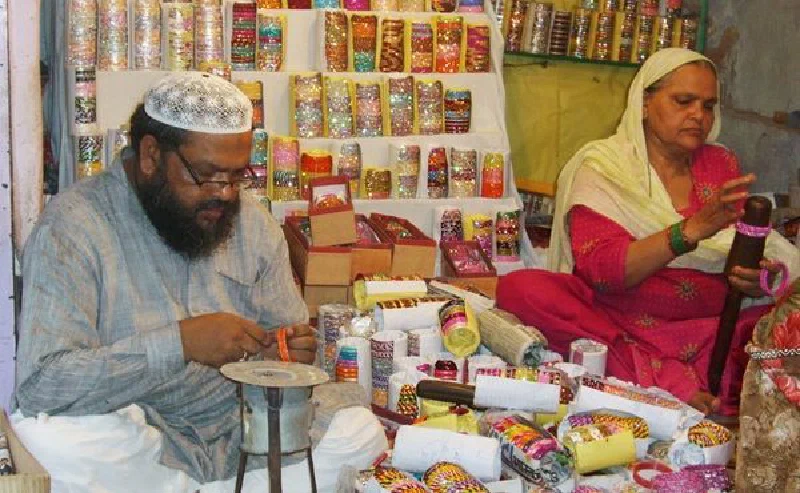
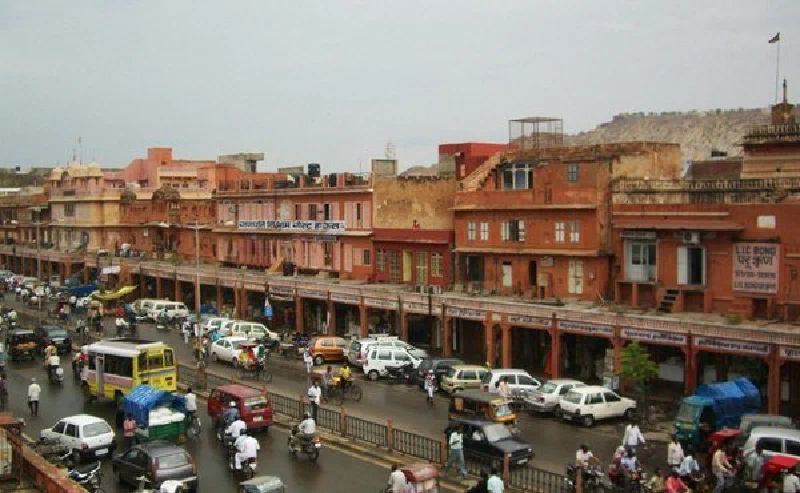
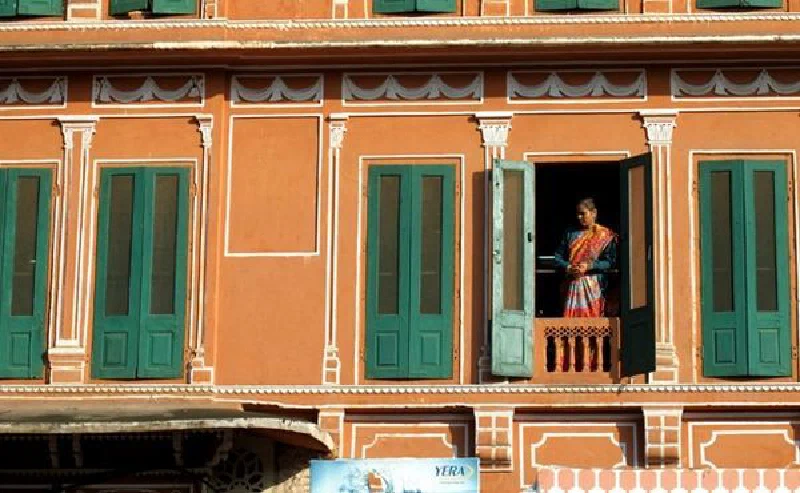
Planned in great detail by Sawai Jai Singh, Jaipur's bazaars are one of the city's main attractions. There are designated areas for jewelry, fabrics and clothes, precious and semi-precious stones.The Jaipur Literature Festival
The DSC Jaipur Literature Festival considered Asia's leading literature event is a celebration of national and international writers and encompasses a range of activities including film, music and theatre. The Festival is held every year from 21st to 25th January.The festival programme includes readings, talks, literary lunches, debates, performances, children’s workshops and interactive activities held in the beautiful heritage property, Diggi Palace in central Jaipur, Rajasthan.
In 2011 the festival organizers have gathered luminaries from the world of literature including Orhan Pamuk, JM Coetzee, Kiran Desai, Richard Ford, Anthony Beevor, Jay McInerney, Mohsin Hamid, Monica Ali, Jung Chang, Fatima Bhutto, Candace Bushnell, Germaine Greer to name a few.
The five-day festival promises to be among the finest literary events for 2011 with over 400 accredited press from across the world, delegations from UK and USA and book lovers from across Asia and abroad.